How to Form High Strength Steel Using Roll Forming Machines

May 21st, 2009

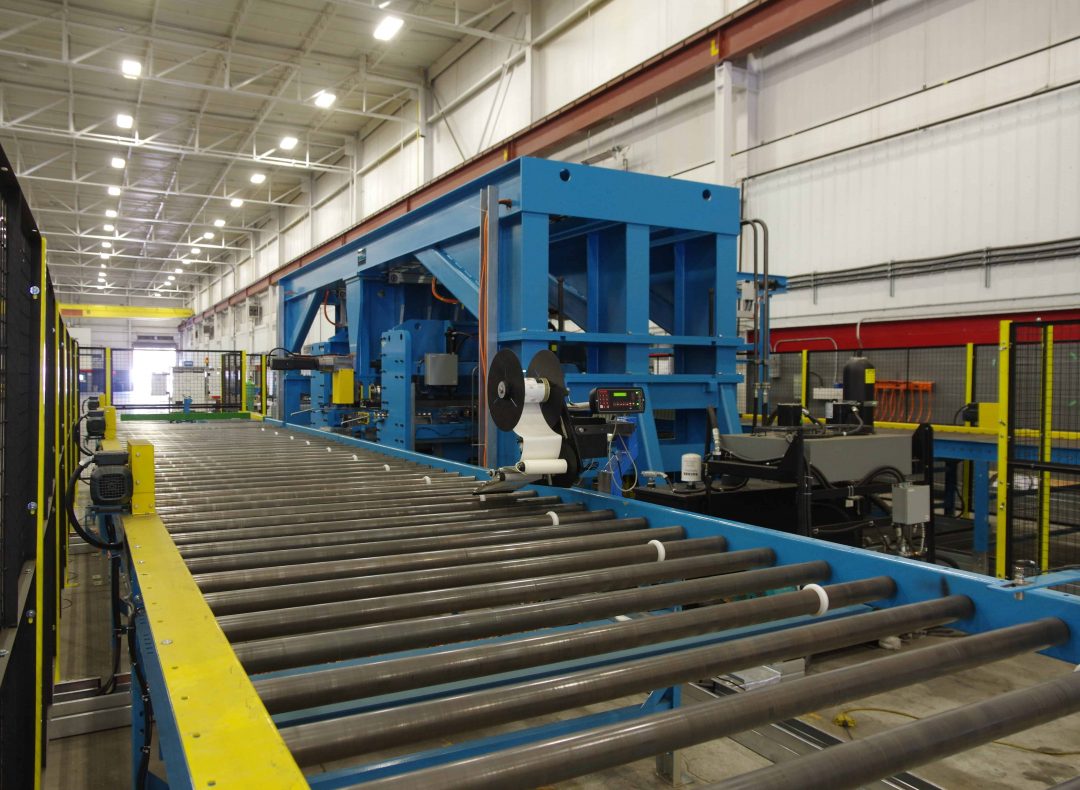
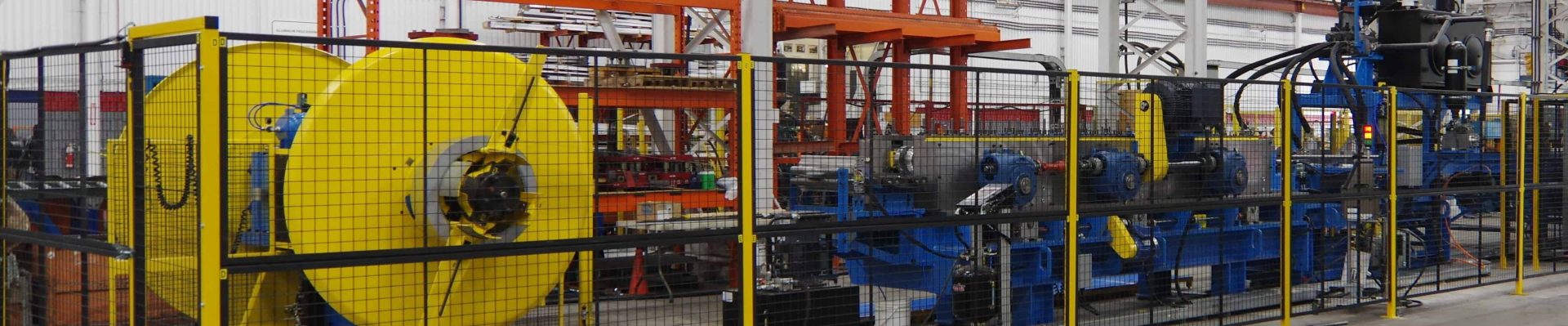
Do you have a product made of High Strength Steel?  Over the past 30 years, SAMCO has built some of the most innovative rollforming lines — handling products from 90,000 psi up to 220,000 psi yield strength Martinsitic coil stock — including in-line cold reductions performed during the rollforming operation.

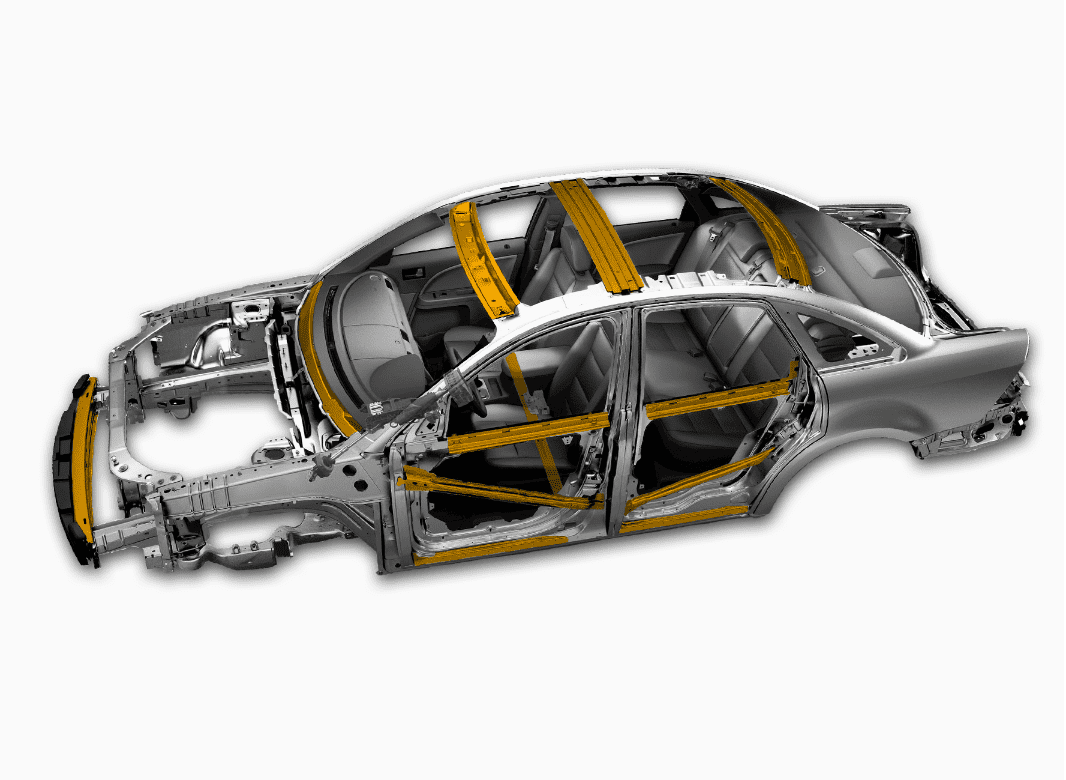
The automotive industry is continually adopting higher strength materials so that thinner gauges can be used in order to reduce vehicle weight.

SAMCO also produces steel truss lines that rollform ¼” thick product made of 90,000 psi yield strength steel — and produces each component at over 325 feet per minute. 

Specially-designed auto-gauging control with digital readouts allow the operator to change from 0.090” to 0.210” thick material — in about 10 seconds — at the touch of a button. Automation built for the 21st century — SAMCO’s customers enjoy tomorrow’s technology today.

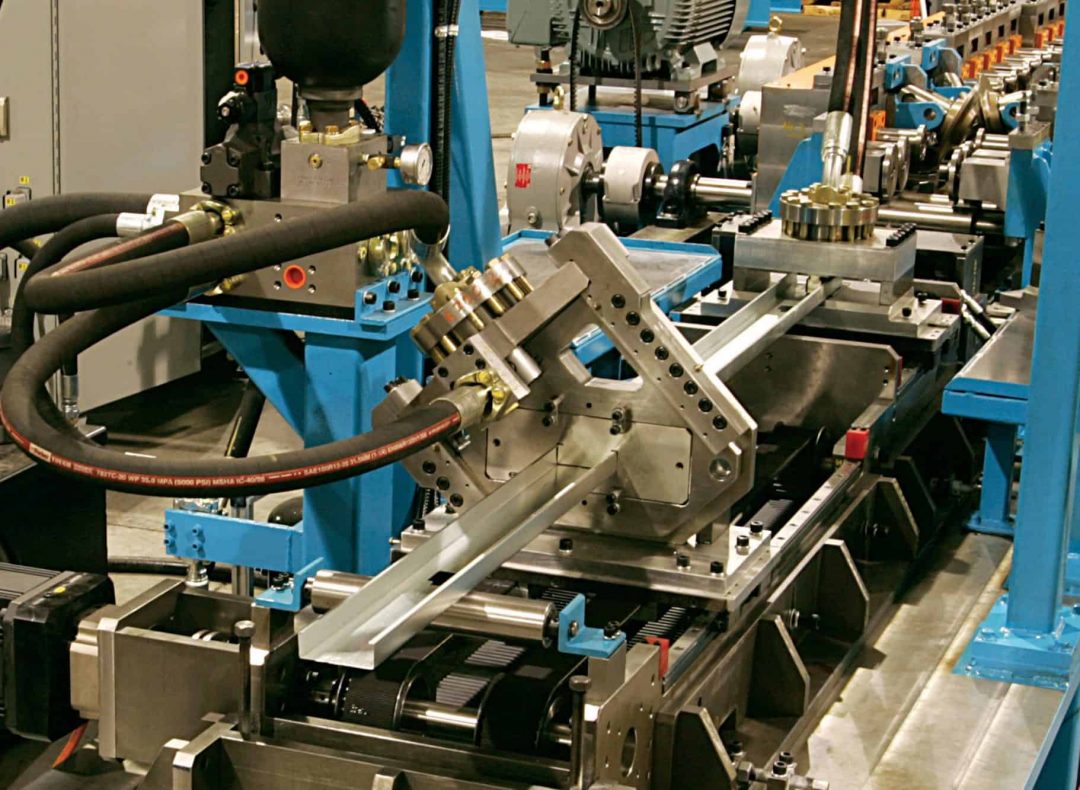
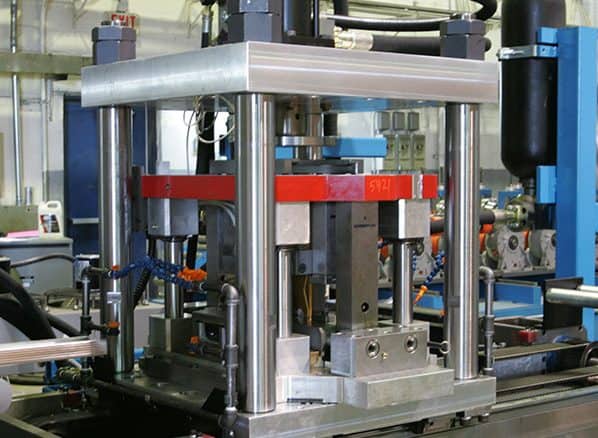
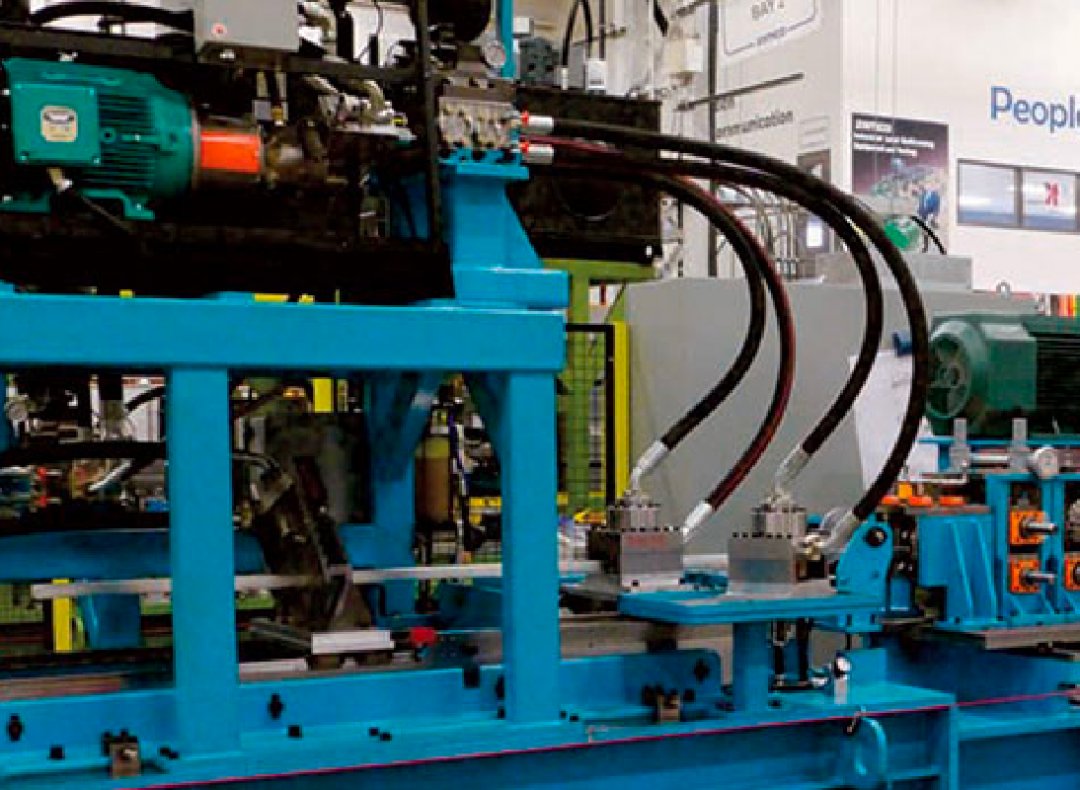
State-of-the-Art high speed Hydraulic Hydrex presses easily cut through this high strength steel — and can be powered by OPEN loop or digitially-controlled CLOSED loop servo accelerators.  These powerful hydraulically-powered presses can perform 200 strokes per minute — depending upon the application.

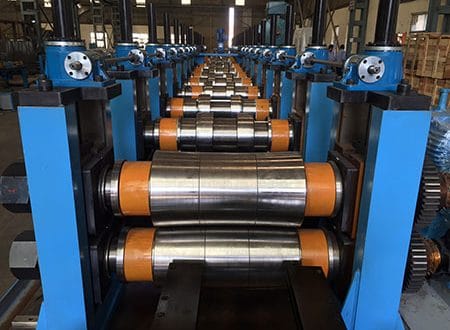
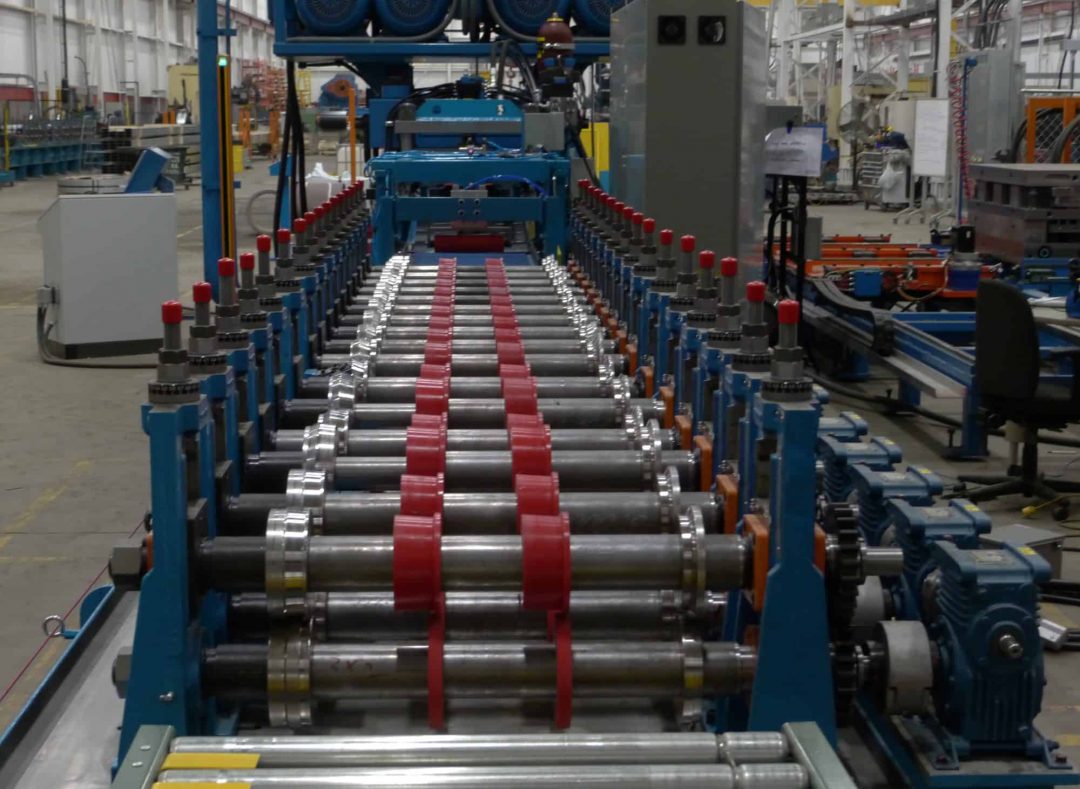
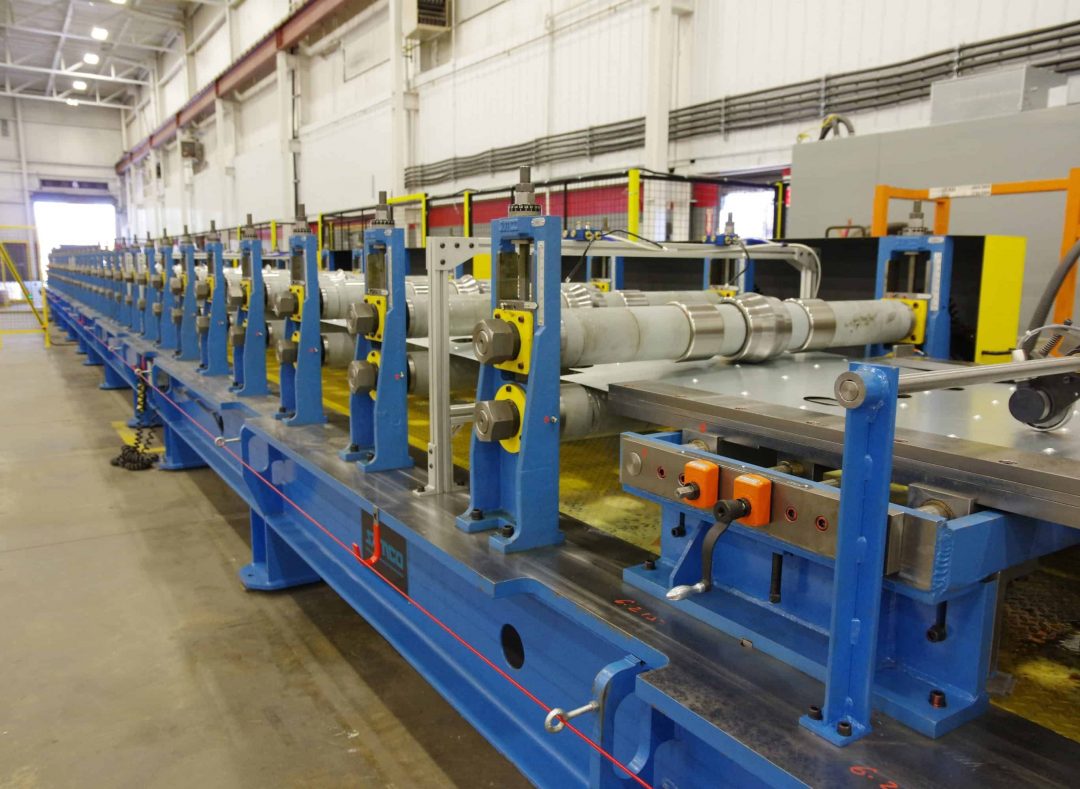
SAMCO offers flexible rollforming systems in fixed shaft and through-shaft duplex rollforming mills for High Strength steel applications.
 

Contact a specialist today to find out how to form high strength steel.

BNN: Roll Forming Machine Manufacture

May 7th, 2009

Samco Machinery world leader of roll forming machines was again showcased on Business News Network (BNN). President and COO, Bob Repovs was featured during an episode of Squeeze Play on May 6, 2009.

As a leader in the manufacturing of roll forming equipment in the automotive and building construction industries Bob Repovs discussed how Samco Machinery has learned to thrive in today’s economy. As the North American automotive market restructures Samco Machinery looked abroad to new emerging markets that could benefit from their automotive experience in manufacturing roll forming systems. Tata Ryerson in India saw the value of utilizing Samco Machinery’s roll forming products in the production of the new Tata nano car. Tata is now roll forming critical chassis parts with Samco Machinery roll formers in order to stay on track with the increased demand. 
 
Samco Machinery has a history of providing high quality, high throughput roll forming systems that are built to last. Their reputation in the building and construction industries is second to none. Known for their quality and value Samco Machinery is often sought after to provide custom solutions for some of the most complicated roll forming applications. Samco has provided stud and track roll formers, purlin roll formers, corrugated roofing roll formers, complex appliance roll formers and many other roll forming systems around the globe.
 
Samco Machinery has built a reputation founded on trust and understanding. There experience and ability to help customers achieve there most challenging goals sets Samco Machinery apart.


BUYING THE RIGHT TYPE OF ROLLFORMING LINE:

October 16th, 2008

When your company is seeking to purchase a rollforming line, there are two very distinct types of rollforming equipment in the market today. There is the type which is designed for lightweight, mobile use, at the work site (which we will refer to as “WORK SITE” equipment); and the type which is in-house, heavy duty, bolted-to-a-concrete-floor, non-portable (which we will refer to as “IN-PLANT” equipment).

Since both types of rollforming line have their place in the market — which one is right for your company? Here are a few points to consider in making that decision.

ANNUAL VOLUME:

One of the key indicators for determining the type of rollforming line you should be buying is found in the annual lineal footage of product you require. For example, if you are a contractor and need 92,000 lineal feet of a product per year, then you should probably be looking at the WORK SITE equipment line for the maximum value – even if it is installed in a factory. The cost ratio of capital equipment to the number of lineal feet dictates that the purchase price of the equipment be at a very low cost level. – otherwise, each foot of rollformed product might end up costing you $2,000 per foot for example.  And if your annual volume is 92,000 lineal per 8-hour shift, then you will need a high speed IN-PLANT line that can run 300-500 fpm.

MAXIMUM PRODUCT LENGTH:

The length of your product can also be a determining factor. Many architectural products today are designed to be seamless and of one continuous piece rather than assembled end-to-end in segments. This can reduce the risk of warranty and liability claims around problems such as leakage, etc. If your company will be involved in making seamless eavestrough, seamless roof panels, etc. —  in lengths of 80-120 foot spans, then your decision is clear;  you ought to be considering the WORK SITE equipment.  Although IN-PLANT lines could theoretically produce equally long segments of product, generally it is the maximum length of the truckload at 55-57 feet that restricts the length of product rollformed in the factory.

LINE SPEED:

Many products today are pushing the manufacturing limits to new heights in the line speeds in which they operate. Cornerbead lines or steel stud and track lines can operate at speeds in excess of 500 fpm. If your goal is to have a high speed line for your company, then you can probably expect to bolt your IN-PLANT equipment to the concrete floor to attain those production rates. Most WORK SITE rollforming lines operate less than 50 fpm as they were not designed for this type of application.

 
COIL SIZE AND COST:

Another important item to consider as you plan your equipment needs is the size of the coil and its cost.  Most IN-PLANT rollforming lines will provide an industrial level uncoiler which can hold a standard coil weighing in a 4,000-lbs, or 6,000-lbs – depending on the product – with a coil Inside Diameter of 20-inches and an Outside Diameter of 60-inches or 72-inches. And the company which sells you the coil will have a standard price per lb for this material (i.e. $0.40/lb). Most WORK SITE rollforming lines cannot support these type of coil weights or sizes; and many customers are shocked to find that the small “pup” coil (1,000-3,000-lbs) which must travel to the site ends up costing 40-80% more (i.e. $0.69/lb) for material because of the surcharge that many steel service centers will apply for their additional labor of creating these smaller coils.

One reason that most popular roofing panels are rollforming IN-PLANT is due in part to the 42” or 48” wide strip width. So it is not very common to find a large panel such as an R-Panel rollforming line at the WORK SITE.  The coils are generally too large to handle. Some products such as guardrail might seem ideal to manufacture at the WORK SITE until you consider the massive size of the roll tooling and large stands and shaft diameters necessary to manufacture such a high strength product; and so the thickness of the material also helps determine the decision to rollform IN-PLANT.

So do your homework. Evaluate the needs of your company with an eye to the future of where you want to grow your business. Consider the speeds, the volumes, the liabilities and the costs. And select the right equipment for the right job.

Stud and Track rollformed profiles: the difference!

May 1st, 2008

Steel framing is becoming a much more popluar choice for commercial, industrial and residential construction. Steel studs are much stronger than wood because they can withstand all elements that different climates face. Elements such as termites and fires, just to name a few.

We get many calls from companies looking to rollform steel stud and track. Many times these people don’t know where to get started. The education we give them is what the most popular sizes are and the difference between structural and drywall stud. We now have a page for those looking to rollform stud and track that will explain the differences between the the load bearing and non load bearing.

Samco India

April 23rd, 2008

Samco’s new 20,000 square foot rollform manufacturing facility in Tatarpur near Faridabad has 2 CNC machines and a boring mill. Our new CEO Vivek Singh who joined March 3, 2008 will take the key leadership role and steer Samco India to its intended path. That path is to bring the 35 years of rollforming experience to India to compete with Korea, Taiwan and China.

Samco India has already received a few jobs in the automotive industry including a rollformer for TATA…the NANO, (PEOPLE’S CAR). TATA motors is the largest OEM in India. Samco India is providing a complete roll forming system to make 6 major chassis parts. This rollforming production system includes 10,000 lb. double uncoiler, a 50 ton pre punch press, a 30 ton flying cut off press, a 18 pass rollformer, 5 stretch benders, two 130 ton mechanical presses, 2 multiple punching presses and 2 flange notching presses.

Duplex Rollformers

April 23rd, 2008

Many manufacturers of steel studs, purlins, roof trusses make more than one product on the same roll former. In many facilities, an entire day can be spent changing each roll on the rollformer getting ready for another product. In the stud industry where the speed of a rollformer is critical (rollformers run at over 500 fpm) because the volumes are so high, this downtime causes a huge ineffiency.

Samco has a duplex rollformer for these customers. The width of the web or flange for example can be changed at literally the touch of a button. On our purlin rollformers for example, even changing from a CEE to a ZEE purlin can be done in 7 seconds at the touch of a button! The stud and track industry cannot afford to have this downtime with the increasing demand for their products. All the stud manufacturers are using duplex rollformers.

For more roll former news and articles on inovations in the rollforming industry visit Industrial Machinery News (http://www.industrial-machinery-news.com)


Roll Tooling

April 23rd, 2008

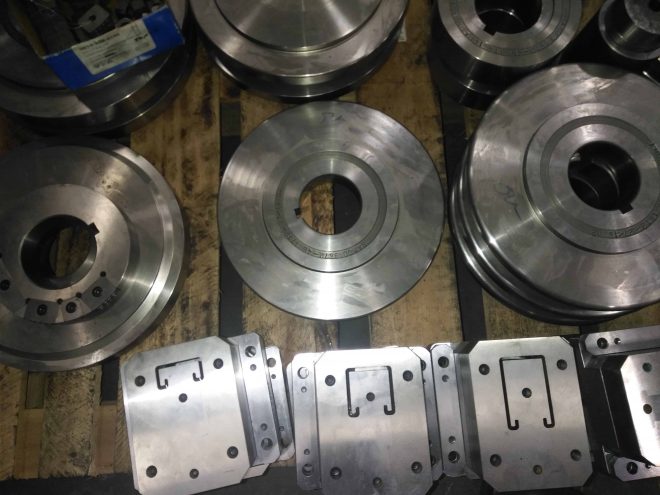
Making rollformers for customers that require customization can be costly. To make it less costly for us, Samco invested in software that would enable us to tryout the material in the rolls on the computer. What many rollform equipment manufacturers do is test the material on new products on the shop floor. If the part doesn’t come out right, often the rolls need to be regrinded. And if the part is very difficult, how many times can the roll tooling be regrinded before they actually need to be remade?

The software we use for our roll tooling on our rollform equipment is called COPRA FEA. It was desined by DATA M in Germany. Samco is the only rollforming equipment manufacturer in North America that is using it to it’s full potential. We will have customers come to us with a part they are thinking about roll forming. We can put it through this software and recommend changes be made to the part to make it less costly to rollform with less passes.

Roof Tile Rollforming

April 8th, 2008

Metal Shingle, Spanish Tile, Fiesta Roof Tile…whatever you want to call it…is becoming more popular for metal roofing. We are seeing an increase in South America and Mexico mainly. The durability and attractiveness is what is making it so popular. Samco makes the roll forming equipment to make this type of metal roofing. Samco’s Roof tile roll forming lines make the highest quality tiles in the world.

The rollformers use AMS controls and Eclipse software if that is what the customer wants. Eclipse software is used as a resource planning system for the entire manufacturing company. Every steel coil can be tracked right through to the end roof tile being delivered. This can be used for multiple locations.

All under one roof

March 28th, 2008

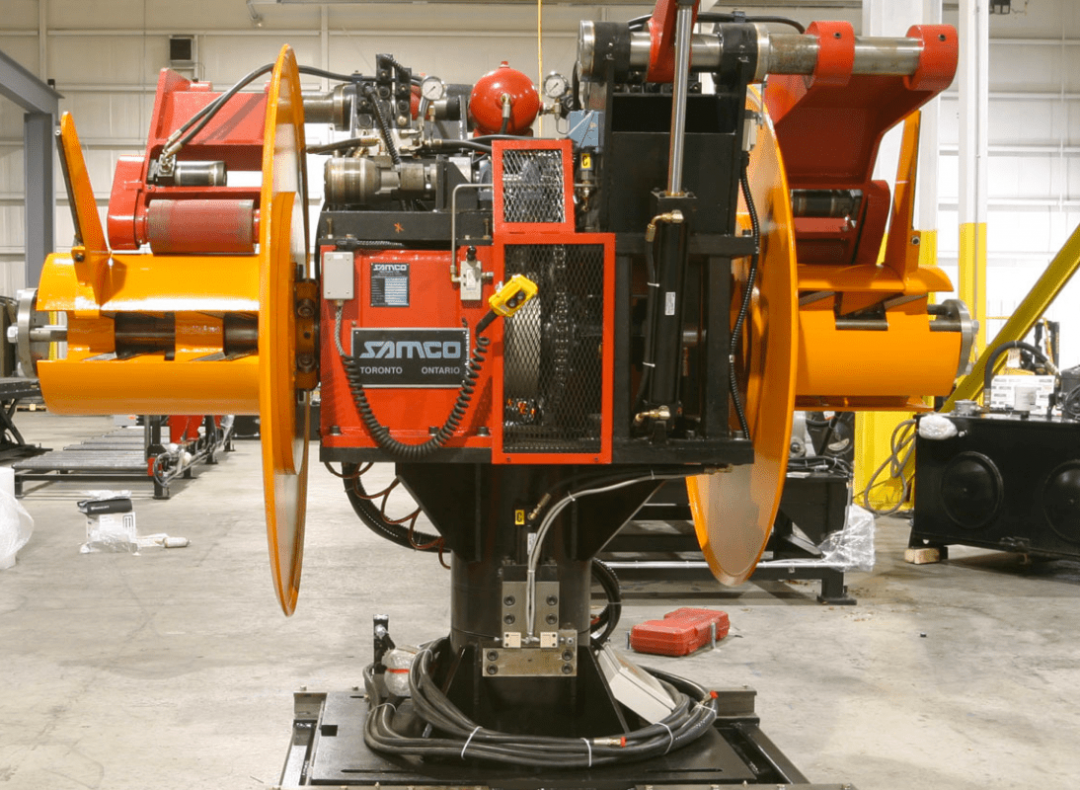
Samco fully believes it is an advantage to our customers to make most of our rollforming systems under one roof. We have 25 engineers on staff including roll tooling, mechanical and electrical. Our project manager can manage everything that goes into the manufacturing of the roll former. From the uncoiler, to the flattener, to presses and cut-off press and rolls and in some cases even the packaging equipment, we design it and manufacture it all here.

We always use brand name electrical components on the rollforming equipment. Our rollformers are delivered all over the world. We don’t want a roll former to break down across the ocean because of a cheap electrical switch so we make sure we know every single part that is used and can gaurantee unnessary breakdowns. Samco prides itself and quality roll tooling and rollforming equipment, we want to uphold that reputation.